The Investment Fraud Special Advisory Committee


Welcome to the Investment Fraud Committee

The Investment Fraud Committee is a distinguished advisory body within Parliament’s APPG on Investment Fraud and Fairer Financial Services. We work to protect investors and pension savers, push for fairer tax treatment for victims, and expose regulatory and enforcement failures in this area. Through Parliamentary debates, expert events, and influential publications, we campaign to ensure victims are heard, supported, and recognised at the highest levels in UK government. 

MORE ABOUT US

In the press.


Dan Whitworth

Senior Reporter, BBC Radio 4's Money Box and BBC Breakfast (ex R1 Newsbeat and R4 Today)


"One of the most important stories I've ever worked on.

With the most inspiring victims... who *somehow* manage to keep going.


Thanks to the BBC Breakfast team at BBC News for sharing their story."


Rt Hon Caroline Nokes

Margaret Snowdon, OBE

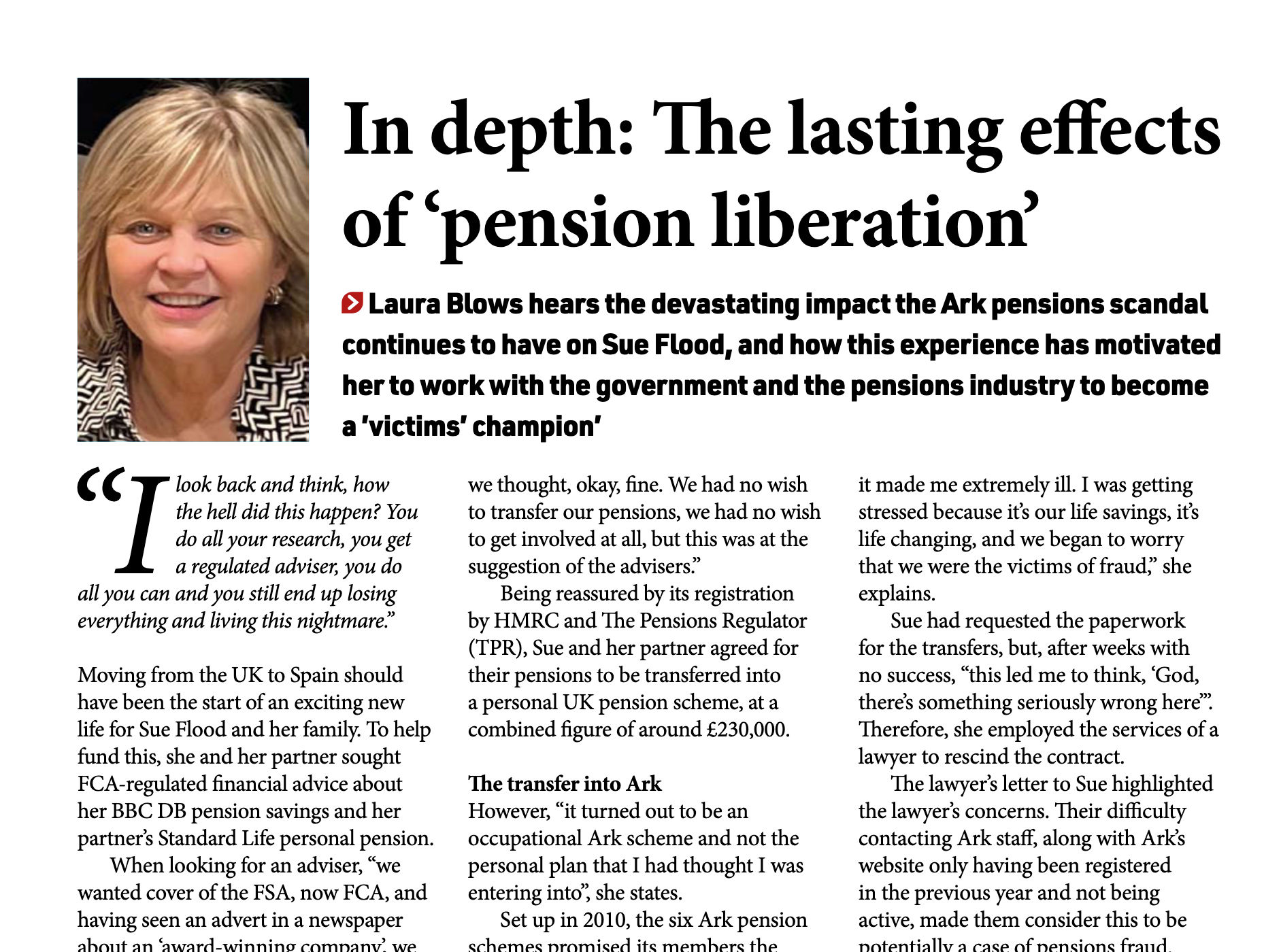
Sue Flood

Carly Barnes-Short

Our HMRC Campaign

Investment & Pension Fraud In Numbers

26,740


In 2023, 26,740 people fell victim to investment fraud. (CityAM)

2.6BN


£2.6 Billion Lost Since 2020: Between January 2020 and December 2023, UK residents reported losses exceeding £2.6 billion due to investment scams, affecting 98,525 victims. (CityAM)

50%


Online investment fraud is also reported to have increased by 50 per cent during the pandemic and to have been the costliest scam. (ThisIsMoney)

“The sums involved in fraud in the UK are vast, running into many billion. I doubt if household burglary even approaches a thousandth of the sums lost at all levels to fraud. Yet it is almost entirely ignored by the police, the Regulatory Authorities and the Government. Less than 1% of fraud is even looked at, let alone prosecuted.”

Anthony Stansfeld, Former Police & Crime Commissioner,


Our Campaigns


What the Committee Works On?

Investment and pension fraud is a growing crisis in the UK, leaving victims with devastating financial losses and inadequate support. Victims face a broken system, while fraud remains under-prioritised. The Investment Fraud Committee is committed to changing this, advocating for victims, demanding accountability, and driving reforms to protect investors and pension savers. 


Our Key Campaigns: 


  • Victims’ Treatment by HMRC: We fight against unfair tax penalties imposed on fraud victims and advocate for a fairer system. 
  • Law Enforcement & Regulatory Failures: By benchmarking international best practices, we aim to address systemic failures in both law enforcement and regulation, ensuring fraud is investigated and prosecuted effectively. 
  • Financial Abuse in Sport: We focus on the growing issue of fraud and financial misconduct in sport, working to raise awareness and improve protections for professional athletes. 
  • Pension Fraud: We highlight the risks of pension fraud and advocate for stronger safeguards and better protection for those saving for retirement. 


Why It Matters 


  • Victims Are Struggling: Many victims face ongoing financial and emotional distress while battling powerful institutions. 
  • System Integrity at Stake: The UK’s financial services sector must regain public trust and confidence. 
  • Fraud Is Growing: Without proper safeguards, the risk of fraud will continue to rise, impacting more people. 


This committee’s work is vital to restoring justice for victims and ensuring a stronger, fairer financial system for everyone. 

OUR CAMPAIGNS

"While the Treasury and HMRC must, of course, ensure that everyone pays what they owe, and in a timely fashion, I believe there must be an immediate shift in how we treat those who have already been exploited. The government must ensure that victims are protected from further harm. Enforcement action against victims should be suspended immediately, and HMRC should be instructed to utilise its wide-ranging powers of debt forgiveness. Victims should not be pursued for payments they should never have been made liable for in the first place. Rather, the government should direct its resources towards tracking down and holding accountable the perpetrators of these fraudulent schemes and advice, with a concerted effort to recover stolen funds. ”


Sarah Bool MP - Co-Chair of the Investment Fraud Committee, MP representing South Northamptonshire.

“We will fight for the rights of investment fraud victims"

Alex Sobel MP, Co-Chair

17 December 2025
Last week, a powerful moment unfolded in the heart of British democracy — the launch of the V11 Foundation at Parliament. Eleven former Premier League footballers, known collectively as the V11, stood together not to celebrate sporting victories, but to demand justice — and to call for meaningful reform in the laws that currently leave victims of financial wrongdoing in limbo. Who Are the V11? The V11 Foundation represents a group of former professional footballers who, having earned their livelihoods on the pitch, fell victim to complex investment schemes marketed as secure and beneficial. These schemes — marketed in the 1990s and 2000s — eventually collapsed, leaving the players facing enormous tax penalties from HM Revenue & Customs (HMRC) despite being recognised as victims of fraud by law enforcement. Instead of being protected, many have been left grappling with mounting liabilities, bankruptcies, lost assets, and ongoing stress. Their experience has drawn comparisons to other high-profile scandals where ordinary people were failed by the system, highlighting deep structural issues in how fraud victims are treated by law and enforcement. A Letter to the Prime Minister Following the Parliament launch, the V11 Foundation sent a heartfelt letter to the Prime Minister, urging urgent action on their behalf. In that letter, they appealed for government intervention to address the unjust consequences they continue to face — even after official recognition as victims. The crux of their appeal centres on one key point: If someone is officially recognised as a victim of criminal wrongdoing, they should not continue to be pursued for penalties directly resulting from that wrongdoing. Their letter calls on the Prime Minister to ensure fairness in how tax liabilities are assessed and enforced when fraud is at the core of the loss — and to reconsider how the law currently treats such cases. Launching a Foundation — But Also a Movement The V11 Foundation isn’t just a support group for the individuals affected; it’s a movement aimed at championing change. At Parliament, the former players shared powerful testimony about how their financial futures were derailed by what they described as manipulative advisers and opaque schemes. Their aim is clear: to ensure that no other athlete, or any individual, is left unprotected and left alone to fight an uphill battle when they fall victim to financial fraud. IFC’s Commitment to Working Together for Reform The Investment Fraud Committee — welcomes the formation of the V11 Foundation and stands in solidarity with its mission. We believe: Fair treatment under the law should include recognition of victim status in all related legal, tax and financial consequences. Regulatory reform is needed to close gaps that allow mis-selling and unregulated investment schemes to flourish. Stronger protections and clearer avenues for redress must be established for victims of financial wrongdoing. Our campaign will focus on collaborating with the V11 Foundation to lobby Parliament, engage with policymakers, and raise public awareness of the systemic issues highlighted by the V11’s story. We see their struggle not only as a matter of individual justice, but as a broader call for reform — one that intersects with financial regulation, taxpayer fairness, criminal justice, and the rights of victims. A Call to Action The launch of the V11 Foundation and the subsequent appeal to the Prime Minister mark a pivotal moment in the fight for fairness and accountability. The IFC is proud to work alongside the V11 in campaigning for much-needed reform. Together, we will continue to: Amplify the voices of victims Engage lawmakers on statutory changes Promote financial protections for sportspeople and the wider public Justice doesn’t just mean recognition — it means changing the system so fewer people have to suffer the same fate.
5 December 2025
What’s happening? Many ordinary people across the UK have lost their life savings, pensions, or investments after being misled, mis-sold to, or defrauded. Now, on top of those losses, many are facing large and often life-changing tax bills from HMRC — even though they were the victims, not the perpetrators. These include: 1. People caught in failed or fraudulent pension schemes 2. People misled into investment tax structures they did not understand 3. Victims formally classified as victims of crime by the police 4. Many others pushed into schemes by unregulated or poorly regulated advisers For many, these tax bills arrive years — sometimes more than a decade — after the events, and with no special protection, no write-offs, and almost no recognition of their victim status. Why are people being taxed if they were victims? Under current UK tax rules, even if someone is tricked into a scheme later found to be fraudulent or abusive, HMRC can still treat the payments they received as taxable — even if the person never benefited, lost money, and was misled throughout. This is because there is no framework or policy in place currently recognising victim status in UK tax matters. That means victims can be told: They owe tens of thousands of pounds, or even more They have 30 days to pay or enter long-term repayment plans Interest and penalties may apply for over a decade Bankruptcy could follow if they cannot pay For many people already ruined by fraud, this is devastating. What changed with the Loan Charge — and why it matters now In 2025, the Government accepted the Independent Loan Charge Review, which admitted that: HMRC’s approach had caused “significant and unacceptable harm” Many people were mis-sold schemes Enforcing the full tax was unfair and disproportionate As a result, the Government announced: 50%+ reductions in many Loan Charge tax bills Around 30% will have their tax completely written off Penalties and interest removed An extra £5,000 written off for everyone affected. This was a major shift: For the first time, the UK accepted that legally-due tax can be reduced or written off when people were misled or harmed. We believe the same principle must now be applied to fraud victims. Why this is urgent? Many fraud victims are now receiving tax bills: Ark pension victims are getting assessments with 30 days to pay Some still cannot get final tax calculations even after 15 years Others face bankruptcy or homelessness. The “V11” footballers — recognised by police as victims of crime — still face multi-million pound tax bills on top of huge financial losses. These people did nothing wrong. They acted in good faith. They were badly let down by advisers, weak regulation, and a system that did not protect them. How other countries protect victims: Other nations do better: Australia After a national investigation, the Australian Tax Office created a Vulnerability Framework to protect people harmed by financial abuse. This allows: - Tax debts to be reduced, deferred or written off - Special teams trained to identify and support victims • A system that avoids adding harm to people already harmed United States After the Bernie Madoff scandal, the US introduced special tax reliefs for ponzi fraud victims. The US also have created: - A statutory Taxpayer Bill of Rights • An independent Taxpayer Advocate Service These ensure the tax system does not punish victims. The UK currently has none of these protections. What we are calling for: We want to ensure victims of fraud are treated fairly, humanely, and consistently. We are calling for: 1. An Independent Review A full review of how HMRC treats investment and pension fraud victims. 2. Immediate protection from harsh enforcement Stopping bankruptcies, home repossessions and unaffordable tax demands for recognised victims of fraud. 3. A UK Taxpayer Bill of Rights A simple, fair set of protections ensuring vulnerable people are not harmed again by the tax system. What you can do: If you or someone you know has been affected: Contact the Investment Fraud Committee Ask your local MP to support a fair review for fraud victims Share your story — it helps us push for change. No victim should be punished for being misled or defrauded. It’s time for a fair system that recognises and protects victims — not one that harms them again. 
3 December 2025
The recent Budget delivered something almost unprecedented: a recognition from both HMRC and the Treasury that legally-due tax can be reduced or written off when enforcing it would be unfair, disproportionate or harmful. For victims of investment and pension fraud—many of whom are now facing crushing tax demands on top of catastrophic losses—this moment matters more than ever. 1. What Happened: A Major Shift in Tax Policy The Government has formally accepted the Independent Loan Charge Review 2025 and announced a sweeping new settlement for individuals caught in loan remuneration schemes. 👉 Review link: https://www.gov.uk/government/publications/loan-charge-independent-review/loan-charge-review Key features include: - 50%+ reductions in most Loan Charge liabilities - Full write-offs for around 30% of cases - An automatic £5,000 write-off for everyone in scope - Removal of penalties and most interest - Promoter fees excluded from tax calculations Crucially, the Review concludes that the Loan Charge caused: - “Significant and unacceptable harm” - Involved “individuals who were duped by promoters” - And that HMRC’s approach has not always been right - This is more than a technical adjustment. - It is a decisive policy shift in how the Government treats taxpayers who were misled, mis-sold to, or harmed by regulatory failures. 2. Why This Matters for Investment & Pension Fraud Victims Thousands of fraud victims—across collapsed investment schemes, pension scams, and highly-engineered tax structures—remain under aggressive HMRC pursuit for historic tax liabilities. And yet these victims are, in many ways, in a far stronger position than the Loan Charge cohort: - Some were classified as victims of fraud by police and regulators - Their losses have been devastating—in many cases wiping out life savings, pensions or entire career earnings - They often gained no financial benefit; instead, they suffered net losses - HMRC is offering no relief at all: only time-to-pay arrangements with decades of interest, penalties, or bankruptcy - This includes victims of pension schemes like Ark, investment schemes such as those promoted to professional athletes, and numerous others who were duped into complex structures by regulated advisers. Fraud victims have not been granted an independent review or settlement opportunity—and are being treated far more harshly. 3. The Parallels With the Loan Charge Are Unavoidable The justifications used to provide relief to loan scheme users apply equally to fraud victims, including: • Mis-selling and deception by advisers and promoters Victims were intentionally misled by individuals or firms regulated by the FCA or operating under the radar of an ineffective supervisory system. • Regulatory and supervisory failure Authorities repeatedly missed red flags—whether in pension transfers, unsuitable investments, or schemes later declared non-compliant. • Severe financial and mental-health harm Families have been devastated by years of uncertainty, loss, and unpayable demands. • Decades-long disputes Some victims have been trapped in HMRC disputes for 10–15 years, with no route to closure. • Inability to pay without life-changing consequences Many face insolvency, homelessness, or total loss of retirement security. If these exact factors justify 50–100% write-offs for individuals caught in the loan charge scandal… …then justice demands at least equivalent relief for victims who were defrauded and left with nothing. 4. Why This Is a Pivotal Opportunity for Parliament The Loan Charge settlement establishes a clear and powerful precedent which we support : Parliament can intervene to reduce or eliminate historic tax liabilities when fairness and proportionality require it—regardless of strict legal liability. This creates a direct opening for MPs to demand: • Full or partial tax exemptions for investment and pension fraud victims • Consistency in policy: fraud victims must not be treated worse than other tax payers • An independent review specifically into HMRC’s treatment of fraud victims At present, the inconsistencies are indefensible: - Identity fraud victims already receive exemptions. - Investment and pension fraud victims receive nothing—even though enforcement for some schemes (e.g., Ark) is expected immediately after Christmas. - Victims currently face a binary and brutal choice: ❌ Decades of interest and penalties through time-to-pay ❌ Bankruptcy ❌ No exemptions, no IVAs, no hardship relief, no recognition of fraud ❌ No action against the perpetrators This cannot be allowed to stand. 5. The Bottom Line The Government now accepts that pursuing full historic tax bills in cases involving: - mis-selling, - deception, - regulatory failure, and - human harm - is unfair and disproportionate. That principle must apply consistently. The Loan Charge settlement is a historic and welcome breakthrough—and a compelling foundation for demanding equivalent protection for all investment and pension fraud victims. Fraud victims deserve an independent review. They deserve parity. And they deserve justice. The Investment Fraud Committee will be calling on the Government to establish this review immediately. Allowing HMRC to proceed with post-Christmas enforcement against devastated fraud victims would be morally impossible to justify.  This is the moment for Parliament to act.
24 November 2025
As HMRC issues assessments in the Ark pension case — hitting doormats just weeks before Christmas — Ark victims are being forced to confront yet another devastating chapter in a saga that has dragged on for more than 15 years. What is now happening to Ark members is not simply an isolated dispute. It is the direct consequence of systemic policy and oversight failures across the UK’s pension and tax framework. And yet again, it is ordinary people — not promoters, not advisers, not regulators — who are paying the price. 1. Registration Without Real Protection The Ark schemes were fully registered with HMRC when many people joined. That registration gave them legitimacy in the eyes of savers — but provided no real scrutiny, no early warning, and no protection for consumers. This is a fundamental flaw: registration should mean safety. In practice, it meant nothing. 2. Regulators Were Too Slow Despite clear red flags around scheme structure and early-access mechanisms, intervention came far too late. By the time regulators acted, the damage had already been done. The system designed to protect savers instead watched from the sidelines. 3. Complex Rules the Public Couldn’t Possibly Navigate The pension tax regime is notoriously complex. Victims relied on assurances, paperwork, and the fact that the schemes were registered. They now feel they have been deceived — but face the consequences of rules they were never equipped to understand. 4. A Decade and a Half of Silence, Stress and Uncertainty For 15 years, Ark victims have lived in limbo. Frozen funds. Incomplete information. No clear timeline.The administrative handling of these cases has been painfully slow, leaving families unable to plan or move forward. 5. Devastating Assessments Now Arriving at the Worst Possible Time The latest HMRC assessments — landing before Christmas — add a cruel emotional and financial blow. Many people now face tax bills on schemes they believed were legitimate and facing a position of net loss. It is difficult to call this fair treatment of citizens acting in good faith. 6. Promoters Move On — Victims Carry the Damage The imbalance in accountability is stark, and it highlights a structural problem: the system punishes the victims. This Moment Demands Reform The Ark case exposes a pensions and tax system that is: too slow to act, too complex to navigate, and too harsh on ordinary people. The fresh wave of assessments is devastating — but it should also be a catalyst for urgent reform. Consumers deserve a system that protects them, not one that leaves them to fight alone for more than a decade. At IFC, we will continue to push for the policy changes that should have been made years ago .
24 November 2025
By Carly Barnes-Short, Chair of the Advisory Committee, on behalf of the Investment Fraud Committee We are deeply saddened to learn of the passing of Baroness Helen Newlove, the Victims’ Commissioner, a woman whose courage, compassion, and relentless dedication transformed the lives of victims across the country. Her voice, her presence, and her leadership will be profoundly missed. I had the privilege of welcoming Baroness Newlove as the keynote speaker at the Investment Fraud Committee’s September 2025 Summit. What she delivered that day was more than a speech — it was a moment of clarity, strength, and solidarity for victims who had long felt unheard. She spoke powerfully about the injustice facing countless fraud victims: individuals who had already suffered devastating financial loss, being pursued for tax liabilities in unjust circumstances. In that room were the V11 footballers, pension-fraud victims, and families whose lives had been turned upside down. Many carried not just financial trauma, but emotional exhaustion. Baroness Newlove saw them. She understood them. And she spoke for them — with sincerity, empathy, and conviction. She reminded us that victims of fraud are victims of crime, not wrongdoers. That their treatment must reflect their suffering, not their circumstances. And that justice must include fairness in every part of the system, including HMRC. Earlier this year, she wrote directly to the Chancellor of the Exchequer urging reform of HMRC’s approach to fraud victims. In her letter, she highlighted: The devastating impact on vulnerable victims. The need for HMRC to adopt trauma-informed communication and decision-making. The importance of listing HMRC under the Victims’ Code so victims are recognised and protected in their dealings with the state. The critical distinction between deliberate tax evasion and innocent victims caught in sophisticated scams. Her full letter can be read here: 🔗 https://victimscommissioner.org.uk/document/letter-to-the-chancellor-of-the-exchequer-tax-claims-on-assets-lost-to-fraud-and-the-treatment-of-victims/ Her advocacy brought national attention to a long-overlooked injustice and gave so many victims the validation they deserved. But her leadership came from a place far deeper than policy. Baroness Newlove was herself a victim of the most unimaginable crime — the murder of her husband, Garry Newlove. From that profound tragedy, she built a life committed to justice, compassion, and service. She transformed her pain into purpose, and fought tirelessly for the rights and dignity of victims throughout the UK. Her strength was extraordinary. Her empathy was genuine. Her courage was constant. And her impact will endure. To her children, her family, and her dedicated team at the Victims’ Commissioner’s Office: we send our heartfelt condolences. We hope you take comfort in knowing how deeply admired she was, and how profoundly she changed the lives of victims across the UK. Baroness Helen Newlove leaves behind a legacy of strength, compassion, and justice — a legacy the Investment Fraud Committee will carry forward in her honour.  She will never be forgotten. — Carly Barnes-Short Chair, Advisory Committee Investment Fraud Committee
11 November 2025
Australia’s Australian Taxation Office (ATO) implements an independent review of the tax treatment of financial abuse victims by the tax system. UK victims of investment and pension fraud, hit by unfair tax treatment, may have a roadmap for reform.
13 October 2025
A shocking case reveals how rigid tax rules are compounding the suffering of fraud victims — and why HMRC must be empowered to act with compassion and discretion. 
11 September 2025
New data released by Action Fraud, in partnership with the Pension Scams Action Group (PSAG), reveals an alarming rise in pension fraud across the UK. In 2024 alone, £17,567,249 was reported lost to pension-related scams — that’s an average of £48,129 per day, with each victim losing around £33,848. These are not just numbers. They represent the hard-earned savings of people approaching or entering retirement — and the consequences are deeply personal. How Pension Fraud is Being Carried Out Fraudsters are becoming more organised, targeted, and convincing. Two core methods stand out in current scams: 1. Investment Fraud Pressure Tactics Scammers pressure individuals into transferring or investing their pension pots quickly. Common signs include: - Promises of high or guaranteed returns - Claims of limited-time opportunities - Urgency to act “before it's too late” - Dismissal of risk or complexity These schemes are designed to disarm savers, override critical thinking, and push through illegitimate transfers before they can be questioned. 2. Account Takeovers Through Impersonation In more technical scams, fraudsters impersonate savers and gain control over their pension accounts. Tactics often include: - Collecting personal details via phishing, cold calls, or data breaches - Posing as legitimate pension providers or advisers - Redirecting or withdrawing pension funds once access is secured These crimes are not only financially devastating — they’re also emotionally distressing and difficult to recover from. Why This Matters Pension fraud is more than a financial issue — it is a national security and well-being concern. Financial and emotional harm These crimes affect victims' long-term financial security and mental health, leading to stress, anxiety, and even breakdowns in later life planning. The scale of the problem Over 500 reports were filed in 2024, with nearly £18 million in confirmed losses. Fraudsters are increasingly sophisticated and persistent. Vulnerability of targets Many victims are older, nearing retirement, or managing lump sums for the first time. This makes them prime targets — especially if they lack digital literacy or experience with investment products. What Individuals Can Do to Protect Themselves PSAG and Action Fraud recommend the following steps for anyone managing their pension savings: Secure your pension account Use strong, unique passwords and enable two-step verification (2SV) on your online accounts. Be wary of unsolicited contact If someone contacts you unexpectedly about your pension — especially offering a “review” or “investment opportunity” — hang up and report it. Spot pressure tactics High returns, urgent decisions, or limited-time deals are all red flags. Reputable advisers never rush you. Stop. Think. Check. Before making any changes to your pension, take the time to: Consult someone you trust Verify financial advisers via the FCA Register Get second opinions from regulated professionals The Role of the Investment Fraud Committee These figures underscore the critical role of the Investment Fraud Committee in tackling this growing crisis. Our priorities include: Raising public awareness through targeted campaigns. Strengthening security standards Enhancing regulation Supporting victims Pushing for enforcement against scammers through coordination with law enforcement and financial regulators Campaigning for HMRC Policy change and fair and affordable solutions for scam victims. Final Thoughts Pension fraud is not a marginal issue — it’s costing ordinary savers nearly £50,000 a day, and affecting hundreds of people each year. Without urgent, coordinated action, that number will only rise. Let’s use this data as a turning point. Together, the Investment Fraud Committee, financial services sector, law enforcement, and the public can reduce these losses — and safeguard the futures people have worked a lifetime to build. Read more here
11 September 2025
The body content of your post goes here. To edit this text, click on it and delete this default text and start typing your own or paste your own from a different source.
8 August 2025
By Sue Flood When you are fighting injustice and taking on a government agency like HMRC, compassion can be hard to find. For victims of financial abuse, pension scams, and investment fraud, compassion isn’t just a nice-to-have — it’s a lifeline. And I know this because I’ve lived it. I’m one of them. Over the last several years, I’ve had the privilege — and the heartbreak — of walking alongside hundreds of victims who’ve been financially and emotionally devastated by fraud and scams. Together with two incredible women, Carly Barnes-Short and Margaret Snowdon OBE, I’ve fought to make sure these victims are seen, heard, and treated with fairness and dignity. Our campaign is not just about fixing systems. It’s about giving people hope when everything else is being taken from them. Victims from Every Walk of Life This isn’t just a story about pensions or investment schemes — it’s about people. Nurses, firemen, athletes, single mums, retired professionals. People from every walk of life who’ve fallen prey to sophisticated scams or been left high and dry by broken systems. What they share is trauma, confusion, and often shame — and far too many are suffering in silence. One of the hardest truths is that this could happen to anyone. I know that, because it happened to me. When victims come to us, they're often at breaking point — emotionally, financially, and sometimes even physically. I’ve personally taken calls from people on the brink of suicide because of HMRC. Carly has too. And I can honestly say that those late-night calls, those heartbreaking conversations, are what fuel this campaign more than anything else. Carly Barnes-Short: The Strategic Heartbeat It’s a privilege to work alongside Carly. As co-chair of the Investment Fraud Special Advisory Committee, she is the strategic powerhouse behind so much of what we’ve achieved — and one of the most compassionate people I’ve ever met. She was already campaigning tirelessly for victims in the world of sport when she learned about what was happening in the pensions space. Without hesitation, she stepped up to help us too — and has never looked back. Carly is the reason we’ve secured key meetings in Westminster and was the driving force behind the Investment Fraud APPG inquiry. She drafts legislation, leads events, builds relationships, and keeps the pressure on — all while juggling her legal career and family life. She's brought serious figures into the campaign like Lord Mann and Simon Myerson KC. Our MPs respect her. They listen to her. And most importantly, they act because of her. She leads much of the dialogue with government ministers and policymakers, always with empathy and professionalism, and sees every victim as a person first — not a case, not a number, but a human being in need of support and help. She stays up late and works on this with me every day. When things get overwhelming or we hit another wall, Carly finds another way forward. She never stops. Her work often goes unseen, but I see it — and I am endlessly grateful. Carly gives me the strength to keep going, especially on the hardest days. Margaret Snowdon OBE: The Voice of Integrity Margaret brings a level of experience and wisdom that gives our campaign real weight and credibility. She commands respect in every room she enters — not through volume, but through quiet authority and integrity. Margaret has been a consistent and principled voice for pension victims for many years, calling out institutional failure and championing fair treatment long before it was fashionable to do so. Her calm approach is a vital counterbalance to the raw emotion this work often brings. She reminds us that we can change the law — because she’s made it happen before. Margaret doesn’t need to shout to be heard. Her presence says everything. My Own Journey: From Victim to Campaigner I never set out to lead a campaign with Carly and Margaret. Like many others, I found myself here because I had no choice. As a fraud survivor, I’ve felt the devastation firsthand. And I couldn’t walk away knowing others were going through the same — or worse — with no one to turn to. With the help of my daughters, close friends, and an incredible group of volunteers, we’ve built a grassroots engine that powers media outreach, peer support, and public pressure. We’ve faced online abuse, institutional resistance, and days where the emotional toll is crushing. But we carry on — not for ourselves, but for the people counting on us. Behind the Scenes While much of our campaign plays out in public — in Parliament, the media, or out on the streets — so much of the real work happens behind the scenes. And I want to pay tribute to the people who help me and Carly keep this engine running day in and day out: my daughters, their close friends, and the brilliant Barry Lee Parker of Piston Design. This campaign simply wouldn’t function without them. My daughters and a small circle of trusted friends have worked tirelessly on everything from managing our social media, building content, updating the website, and keeping us organised. They’ve done this around full-time jobs, families, and their own lives — often late into the night. Together, this team has helped us not only build our online presence, but also organise vital moments like the parliamentary summit — which was a major milestone for our movement. They juggle logistics, liaise with media, and make sure that the front-line work Carly, Margaret, and I are doing can actually happen. Grassroots campaigns like ours are built on heart, hard work, and human connection. Thank you, from the bottom of my heart. What We've Achieved So Far Together, we have: Launched a parliamentary inquiry into investment fraud and unfair tax treatment Built a cross-party alliance of MPs, legal experts, and financial leaders Supported hundreds of victims with pro bono advice, peer support, and advocacy Organised the “Enough is Enough” march and secured meetings with HMRC and Treasury officials Pushed for reforms that prioritise compassion and affordability over bureaucracy But we’re not done. Despite all our hard work and support, the government isn’t listening — and until they do, we will keep fighting. We won’t stop until the Government, Treasury, and HMRC finally wake up to the reality of what victims are facing. Lives are on the line — and they need to start listening. I will keep fighting until they do. To Our Supporters: Thank You This campaign is nothing without the hundreds of people who’ve stood beside us — from MPs and journalists to volunteers and fellow victims. You’ve shown that compassion is contagious, and that together, we are stronger. Final Thoughts: Why We Keep Going People often ask how we do it. The truth is: we don’t really have a choice. Not when we know lives are at stake. This fight is about justice, yes — but it’s also really about compassion. Compassion for people we’ve never met, but whose stories have become part of us. To Carly and Margaret: thank you. For all your hard work without charge, for giving us hope, and most of all your compassion. You’re helping save lives. And to every victim out there: You are not alone. We see you. We hear you. And we won’t stop fighting for you. We are all in this together, and we have some great people behind us who really care. Compassion is not a weakness — it’s the greatest strength of all, and it means everything to victims. We just need HMRC and the Government to start showing it to our victims now too.

Sign up to hear about our work and receive invitations to our events.

CONNECT WITH THE COMMITTEE

This is not an official website of the House of Commons or the House of Lords. It has not been approved by either House or its committees. All-Party Parliamentary Groups are informal groups of Members of both Houses with a common interest in particular issues. The views expressed in these webpages are those of the group.